

Introduction
Technology is evolving faster than ever, and one of the most groundbreaking advancements shaping our future is the rise of autonomous adaptive systems. These intelligent systems are designed to operate independently, learn from their environments, and adjust their behavior in real time without direct human control.
From self-driving cars and smart factories to AI-driven healthcare solutions, autonomous adaptive systems are becoming the foundation of next-generation automation. Unlike traditional machines that rely on pre-programmed instructions, these systems can analyze data, make decisions, and improve their performance through continuous learning.
As we move deeper into the era of artificial intelligence and automation, understanding how these systems function—and how they’ll transform industries—has become more crucial than ever. In this blog post, we’ll explore the future of autonomous adaptive systems, their core technologies, real-world applications, benefits, and the challenges that come with their adoption.
What Are Autonomous Adaptive Systems?
Autonomous adaptive systems are intelligent technologies that can operate independently and adapt to changes in their environment without constant human supervision. These systems combine automation, artificial intelligence (AI), and machine learning (ML) to make decisions, learn from experiences, and continuously improve their performance.
In simpler terms, think of them as smart systems that think and evolve. Instead of following fixed rules or commands, they can analyze data in real time, detect patterns, and adjust their actions based on new information.
For example:
- A self-driving car uses sensors and AI to understand traffic, weather, and road conditions to make safe driving decisions.
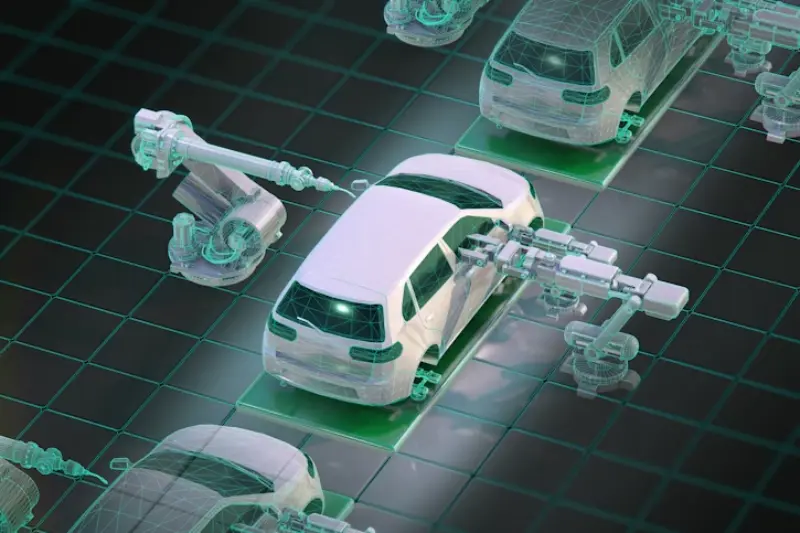
- A smart manufacturing robot can detect a machine fault and automatically adjust production to maintain efficiency.
- An AI healthcare system can learn from patient data to predict diseases and suggest personalized treatments.
Unlike traditional automation, which performs repetitive tasks based on fixed programming, autonomous adaptive systems are dynamic and self-learning. This adaptability allows them to function effectively in unpredictable and complex environments—something traditional systems struggle with.
In essence, autonomous adaptive systems represent the next step in the evolution of technology—machines that not only work for us but think and grow with us.
How Do Autonomous Adaptive Systems Work?
Autonomous adaptive systems operate through a combination of data collection, analysis, decision-making, and self-learning. They are built on a network of intelligent technologies that allow them to sense, think, and act with minimal or no human input. Here’s how they typically work step by step:
Sensing and Data Collection
The system starts by gathering real-time data from its surroundings using sensors, cameras, IoT devices, or user inputs.
For example:
- A drone collects environmental data through its sensors.
- A self-driving car uses radar and cameras to detect obstacles and traffic conditions.
Data Processing and Analysis
- Once data is collected, the system uses artificial intelligence (AI) and machine learning (ML) algorithms to process and interpret it.
- This helps the system recognize patterns, detect anomalies, and predict what might happen next.
Decision-Making
- Based on the analysis, the system makes independent decisions. It applies pre-trained models and learned experiences to choose the best course of action.
- For instance, an autonomous delivery robot might decide to take an alternate route if it detects road construction ahead.
Action and Execution
- After making a decision, the system acts on it. This could mean adjusting a machine’s operation, changing direction, or sending alerts to other connected devices.
Learning and Adaptation
- This is what makes autonomous adaptive systems unique. They don’t just follow a single pattern—they learn from every experience. Using feedback loops, they continuously improve their decision-making ability, accuracy, and efficiency over time.
Continuous Optimization
- The more data these systems collect and analyze, the smarter they become. They refine their algorithms, reduce errors, and adapt to new environments or challenges automatically.
In short, autonomous adaptive systems work like living organisms in the digital world — constantly sensing, learning, and evolving to perform tasks more efficiently and intelligently.
Key Technologies Powering Autonomous Adaptive Systems
The evolution of autonomous adaptive systems depends on several cutting-edge technologies that enable machines to sense, analyze, learn, and act intelligently. These technologies work together to give systems the ability to make real-time decisions and adapt to changing conditions. Here are the key components driving their development:
Artificial Intelligence (AI)
- At the heart of every autonomous adaptive system lies Artificial Intelligence (AI). AI allows machines to think, reason, and solve problems like humans. Through advanced algorithms, AI helps systems make decisions, recognize patterns, and process vast amounts of data quickly and accurately.
- For example, AI enables self-driving cars to interpret traffic signals and respond instantly to unexpected events on the road.
Machine Learning (ML)
- Machine Learning is a subset of AI that allows systems to learn from experience. Instead of relying on pre-programmed instructions, ML algorithms analyze data and improve their performance over time.
- This continuous learning process helps systems adapt to new environments, detect changes, and optimize operations without human intervention.
Internet of Things (IoT)
- The Internet of Things (IoT) connects physical devices like sensors, machines, and vehicles to the internet, allowing them to communicate and share data.
- In autonomous adaptive systems, IoT devices act as the sensory organs, collecting real-time information such as temperature, speed, pressure, or location. This data is then processed to make intelligent decisions.
Robotics
- Robotics provides the physical capability for autonomous systems to interact with the real world. Combined with AI and ML, robots can perform complex tasks — from assembling products in factories to exploring hazardous environments — all while learning and adapting on the go.
Edge Computing
- Edge computing allows data to be processed closer to where it’s generated rather than relying on distant cloud servers. This reduces latency and ensures faster responses, which is crucial for time-sensitive applications like autonomous vehicles or smart grids.
Big Data and Cloud Computing
- Autonomous adaptive systems depend on big data to learn effectively. Cloud computing provides the storage and computational power needed to handle large datasets and train AI models. This combination enables continuous updates, analysis, and optimization.
Quantum Computing (Emerging Technology)
- Though still in early stages, quantum computing has the potential to revolutionize autonomous adaptive systems. It can process complex calculations exponentially faster than traditional computers, enabling ultra-fast learning and decision-making capabilities.
Together, these technologies create the foundation for systems that can sense, think, learn, and act autonomously—paving the way for a smarter, more connected future.
Real-World Applications of Autonomous Adaptive Systems
Autonomous adaptive systems are no longer futuristic concepts — they are already transforming industries across the globe. These intelligent systems are improving efficiency, safety, and decision-making in ways that were once impossible. Below are some of the most impactful real-world applications:
Healthcare
- In healthcare, autonomous adaptive systems are playing a vital role in diagnosis, treatment, and patient monitoring.
- AI-powered diagnostic tools analyze medical images and detect diseases faster than traditional methods.
- Adaptive systems learn from patient data to personalize treatment plans.
- Smart robots assist surgeons during complex operations with precision and stability.
- Remote monitoring systems automatically adjust patient care based on real-time health metrics.
- These innovations are not only improving patient outcomes but also reducing the burden on healthcare professionals.
Transportation and Autonomous Vehicles
- Perhaps the most visible example of these systems is in self-driving cars and drones.
- Autonomous vehicles use sensors, cameras, and AI to navigate safely through traffic, predict obstacles, and optimize routes.
- Delivery drones and robotic couriers adapt to weather, terrain, and urban conditions to complete deliveries efficiently.
- Smart traffic systems analyze city-wide traffic data and adjust signals dynamically to reduce congestion.
- These advancements are paving the way for safer, cleaner, and more efficient transportation networks.
Manufacturing and Smart Factories
- In the manufacturing sector, autonomous adaptive systems are transforming production lines into intelligent ecosystems.
- Robots equipped with AI can detect product defects and self-correct their actions.
- Machines communicate with each other to balance workloads and optimize efficiency.
- Predictive maintenance systems identify potential failures before they occur, reducing downtime and saving costs.
- This shift toward Industry 4.0 is making factories more agile, efficient, and sustainable.
Agriculture
- Smart agriculture is another field benefiting from adaptive automation.
- Drones and AI-powered sensors monitor soil conditions, crop health, and weather patterns.
- Autonomous tractors and harvesters adapt their operations based on field conditions.
- Data-driven irrigation systems adjust water levels automatically to optimize crop yield and resource use.
- As a result, farmers can make data-backed decisions that increase productivity while reducing waste and environmental impact.
Defense and Space Exploration
- In defense and aerospace, autonomous adaptive systems are essential for missions in extreme or high-risk environments.
- Military drones adapt to new terrains and respond to threats without direct control.
- In space missions, autonomous robots assist astronauts and conduct maintenance tasks where human presence is limited.
- NASA and other space agencies use adaptive systems to navigate planetary surfaces and collect valuable data autonomously.
- These systems enhance safety, accuracy, and mission success in some of the world’s most challenging conditions.
Major Benefits of Autonomous Adaptive Systems
The rise of autonomous adaptive systems marks a new era of innovation and intelligence across industries. These systems go beyond simple automation — they think, learn, and optimize operations on their own. The benefits they bring are wide-ranging and deeply transformative. Below are some of the most significant advantages:
Real-Time Decision Making
- One of the most powerful features of autonomous adaptive systems is their ability to make instant, data-driven decisions.
- They process and analyze large volumes of information in real time.
This allows them to respond immediately to changing environments, emergencies, or unexpected challenges.
For example, self-driving cars can detect a pedestrian crossing the street and react within milliseconds to prevent accidents.
Improved Efficiency and Productivity
- By learning from patterns and continuously optimizing their processes, these systems significantly boost productivity.
- In manufacturing, adaptive robots reduce downtime by self-adjusting to new production needs.
In logistics, AI systems optimize delivery routes to save time and fuel.
This automation allows businesses to achieve more in less time while maintaining high-quality results.
Cost Reduction
- Although the initial investment may be high, autonomous adaptive systems save money in the long term.
- Predictive maintenance minimizes equipment breakdowns and costly repairs.
- Energy optimization reduces operational costs.
Automated workflows cut labor costs and improve resource utilization.
In essence, they turn efficiency into profitability.
Enhanced Accuracy and Reliability
- Unlike traditional systems, autonomous adaptive technologies are less prone to human error.
- AI-powered systems analyze data precisely, reducing mistakes in decision-making.
Adaptive algorithms continuously learn and refine their models for greater reliability.
This is especially crucial in industries like healthcare, aviation, and finance where accuracy is critical.
Continuous Learning and Improvement
- A key benefit of these systems is their ability to learn from experience.
- Each new piece of data helps them improve their future performance.
They adapt to changing environments, regulations, or customer needs automatically.
This ensures long-term sustainability and innovation without frequent human intervention.
Challenges and Ethical Concerns in Autonomous Adaptive Systems
While autonomous adaptive systems promise a future of innovation and efficiency, their development and deployment also bring significant challenges and ethical concerns. As these systems become more powerful and independent, questions arise about safety, transparency, accountability, and the impact on society. Below are some of the most pressing challenges and ethical issues that must be addressed.
Data Privacy and Security Risks
- Autonomous systems rely heavily on vast amounts of data to function effectively. However, this dependence creates major privacy and security challenges.
- Sensitive personal or business data can be exposed to hackers if systems are not properly secured.
Continuous data collection raises concerns about how much information is being gathered and how it’s used.
For example, autonomous vehicles or smart homes constantly track user behavior, which can be exploited if data falls into the wrong hands.
Bias and Fairness in AI Decision-Making
- Since these systems learn from data, they can unintentionally inherit biases present in the datasets used for training.
- This can lead to unfair or discriminatory outcomes in areas like hiring, lending, or law enforcement.
Without transparency in how AI algorithms make decisions, it becomes difficult to detect and correct such biases.
Ensuring fairness and accountability in AI-driven decisions is one of the biggest ethical challenges of our time.
Job Displacement and Workforce Impact
- Automation and self-learning technologies have the potential to replace human jobs, particularly in industries like manufacturing, logistics, and customer service.
- As machines take over repetitive or analytical tasks, millions of workers may face job insecurity.
The workforce will need retraining and reskilling to adapt to new roles that require human creativity, empathy, and oversight.
Balancing technological progress with social responsibility is critical for a smooth transition.
Lack of Transparency (The “Black Box” Problem)
- Many AI-driven systems operate as black boxes, meaning their decision-making processes are not easily understood—even by their creators.
- This lack of explainability makes it difficult to audit or challenge system decisions.
In critical areas like healthcare or law, this can create ethical and legal dilemmas if something goes wrong.
Developing explainable AI (XAI) models is essential to build trust and accountability.
Safety and Reliability Concerns
- As autonomous systems take on more control in real-world environments, ensuring safety and reliability becomes vital.
- A malfunctioning self-driving car or medical AI could lead to serious consequences.
Testing and validation in complex, unpredictable conditions remain major technical hurdles.
Continuous monitoring, fail-safe mechanisms, and ethical oversight are necessary to prevent harm.
Ethical and Legal Accountability
- If an autonomous system makes a wrong or harmful decision, who is responsible—the programmer, the company, or the system itself?
- Current legal frameworks struggle to assign accountability in such cases.
Governments and regulatory bodies are still developing policies for AI ethics, liability, and compliance.
Establishing global standards and ethical guidelines will be crucial to managing these risks.
Future Trends Shaping Autonomous Adaptive Systems
The world of autonomous adaptive systems is evolving at an incredible pace, driven by breakthroughs in artificial intelligence, computing power, and data connectivity. As technology matures, these systems will become more intelligent, efficient, and integrated into everyday life. Below are the key future trends that will shape their growth and impact across industries.
Integration of Artificial Intelligence with Quantum Computing
- One of the most promising trends is the fusion of AI and quantum computing.
- Quantum computers can process massive datasets and perform complex calculations far faster than classical machines.
When combined with AI, they will enable autonomous systems to learn and adapt at unprecedented speeds.
This could revolutionize industries such as drug discovery, financial modeling, and climate forecasting, where adaptive systems need to analyze huge amounts of information quickly.
Human–Machine Collaboration (Augmented Intelligence)
- Instead of fully replacing humans, future systems will focus on collaboration between humans and machines.
- Adaptive systems will handle repetitive or high-risk tasks, while humans provide emotional intelligence, creativity, and judgment.
This hybrid approach, known as augmented intelligence, ensures that human values remain central in decision-making.
In workplaces, this will enhance productivity while preserving ethical oversight.
Fully Autonomous Networks (Self-Managing Systems)
- The future will see the rise of self-managing digital ecosystems—networks that can automatically configure, secure, and repair themselves.
- In telecommunications, autonomous 6G networks will optimize bandwidth and performance without human control.
In IT, self-healing systems will detect and fix software issues in real time.
This trend will dramatically improve system reliability, reduce downtime, and minimize human intervention.
Expansion of Edge and Fog Computing
- As devices become smarter, edge computing and fog computing will continue to grow.
- Data will be processed closer to its source, reducing latency and bandwidth use.
This is especially important for autonomous vehicles, drones, and industrial robots that require instant decision-making.
The combination of edge AI and adaptive systems will make real-time intelligence possible anywhere, even in remote environments.
Ethical and Explainable AI (XAI)
- As AI becomes more autonomous, there will be a stronger push for transparency and ethics.
- Future systems will need to explain how and why they make certain decisions.
Explainable AI (XAI) frameworks will help ensure accountability, fairness, and compliance with global regulations.
This will be essential to build public trust and acceptance of autonomous systems in sensitive sectors like healthcare, law, and finance.
Swarm Intelligence and Collective Learning
- Inspired by nature, swarm intelligence allows multiple autonomous systems to work together as a single intelligent unit.
- For example, fleets of drones can coordinate in real time for search-and-rescue missions or environmental monitoring.
In logistics, delivery robots could share data and optimize routes collectively.
This collaborative learning model will make systems faster, smarter, and more resilient.
How Autonomous Adaptive Systems Will Transform Industries by 2035
By 2035, autonomous adaptive systems will no longer be limited to experimental labs or high-tech companies — they’ll be an integral part of nearly every industry. Their ability to learn, evolve, and make independent decisions will drive a massive wave of digital transformation, improving efficiency, sustainability, and innovation on a global scale. Here’s how these systems are expected to reshape major industries by 2035:
Healthcare: Smarter, Predictive, and Personalized Care
- By 2035, healthcare systems will rely heavily on AI-driven adaptive technologies to deliver precise, real-time care.
- Hospitals will use autonomous diagnostic tools that analyze patient data and detect diseases before symptoms appear.
- Adaptive robots will assist in surgeries, learning from each procedure to improve accuracy.
- Personalized treatment plans will be created through AI systems that continuously learn from patient outcomes.
- Healthcare will shift from reactive treatment to predictive prevention, reducing medical errors and saving millions of lives.
Transportation: The Rise of Fully Autonomous Mobility
- The transportation sector will experience one of the biggest revolutions.
- Self-driving vehicles will become mainstream, drastically reducing human error and traffic accidents.
- Smart traffic systems will communicate with vehicles to manage flow and minimize congestion.
- Public transport will use adaptive scheduling based on passenger demand and real-time conditions.
- By 2035, cities could see fully autonomous transportation networks, making travel safer, faster, and more energy-efficient.
Manufacturing: The Era of Intelligent Factories
- Factories of the future will be fully adaptive, with machines that think and self-manage.
- Production systems will automatically adjust to supply chain changes, material shortages, or demand fluctuations.
- Predictive maintenance powered by AI will eliminate downtime.
- Autonomous robots will work collaboratively with humans to handle complex assembly tasks.
- These smart factories will lead to zero-waste manufacturing, increased efficiency, and higher customization in products.
Agriculture: Sustainable and Autonomous Farming
- By 2035, agriculture will be dominated by autonomous adaptive farming systems.
- Drones and robots will monitor crops, analyze soil health, and apply fertilizers precisely when needed.
- Climate-adaptive models will help farmers predict weather changes and adjust their strategies accordingly.
- Automated irrigation systems will conserve water while maximizing yield.
- This will make global food production smarter, more efficient, and environmentally sustainable.
Energy: Smart Grids and Renewable Optimization
- Energy systems will become self-regulating and adaptive, ensuring stability and sustainability.
- Smart grids will automatically balance electricity supply and demand using real-time data.
- Renewable energy sources like solar and wind will be integrated seamlessly with adaptive storage systems.
- AI-based monitoring will detect faults instantly and reroute energy flow.
This will lead to a carbon-efficient energy ecosystem, reducing dependency on fossil fuels and improving energy reliability worldwide.
Education: Personalized and Lifelong Learning
Education systems will leverage adaptive learning technologies to personalize education for every student.
- AI tutors will analyze learning patterns and adjust content in real time.
- Virtual classrooms will adapt to student performance and emotional states.
- Institutions will use predictive analytics to improve teaching strategies and outcomes.
By 2035, education will be more inclusive, accessible, and tailored, allowing people to learn at their own pace throughout life.
Finance: Intelligent and Transparent Financial Systems
- The financial industry will see smarter, safer, and more adaptive systems.
- AI-powered trading algorithms will predict market trends more accurately.
- Adaptive fraud detection systems will evolve to counter new cyber threats.
- Personalized financial services will help individuals make smarter investment decisions.
By 2035, autonomous finance could operate with minimal human oversight, offering more stability and fairness in the global economy.
Defense and Security: Smarter Protection Systems
Defense systems will rely on autonomous adaptive technologies for surveillance, cybersecurity, and tactical operations.
- AI-driven drones and robots will carry out missions in dangerous environments.
- Adaptive cybersecurity frameworks will detect and neutralize threats before they spread.
- Military training simulations will use AI to create realistic, evolving scenarios.
- These innovations will make defense systems more proactive, responsive, and resilient.
FAQs Future of Autonomous Adaptive Systems In 2026
What are autonomous adaptive systems?
Autonomous adaptive systems are advanced technologies that can make decisions, learn from data, and adjust their behavior in real time without direct human control. They use artificial intelligence (AI), machine learning, and sensor data to function independently and adapt to changing environments.
How are autonomous adaptive systems different from traditional automation?
Traditional automation follows pre-set rules and cannot change behavior without reprogramming. In contrast, autonomous adaptive systems learn from experience and improve over time, enabling them to handle new and complex situations intelligently.
What industries use autonomous adaptive systems?
These systems are used in healthcare, automotive, manufacturing, finance, defense, agriculture, and smart cities. Examples include self-driving cars, AI-powered diagnostics, adaptive supply chain systems, and autonomous drones.
What is the future of autonomous adaptive systems?
By 2035, these systems are expected to be deeply integrated into everyday life, improving efficiency, safety, and sustainability across industries. They will drive innovation in smart infrastructure, personalized healthcare, and autonomous mobility solutions.
What are the main challenges in adopting autonomous adaptive systems?
Key challenges include data privacy, ethical concerns, high development costs, system bias, and the need for regulatory standards. Ensuring transparency and accountability in decision-making is also crucial.
Will autonomous adaptive systems replace human workers?
Not entirely. While they will automate repetitive and data-driven tasks, humans will still be needed for creative thinking, emotional intelligence, and ethical decision-making. The focus will shift toward human-AI collaboration rather than full replacement.
Are autonomous adaptive systems safe?
When properly designed and regulated, they are safe and often reduce risks compared to human-controlled systems. However, safety depends on robust testing, cybersecurity measures, and continuous monitoring.
Conclusion
The future of autonomous adaptive systems represents a revolutionary shift in how technology interacts with the world around us. These systems are not just automated—they are intelligent, self-learning, and capable of evolving with minimal human input. From healthcare and manufacturing to transportation and finance, their ability to analyze data, adapt in real time, and make precise decisions is reshaping entire industries.
By 2035, autonomous adaptive systems are expected to become an essential part of global infrastructure, powering smarter cities, safer environments, and more efficient organizations. However, this progress must be accompanied by strong ethical frameworks, transparency, and human oversight to ensure that innovation serves humanity’s best interests.
Ultimately, the integration of autonomous adaptive systems will lead us toward a future where technology not only enhances human capabilities but also collaborates intelligently to create a more sustainable, connected, and adaptive world.